
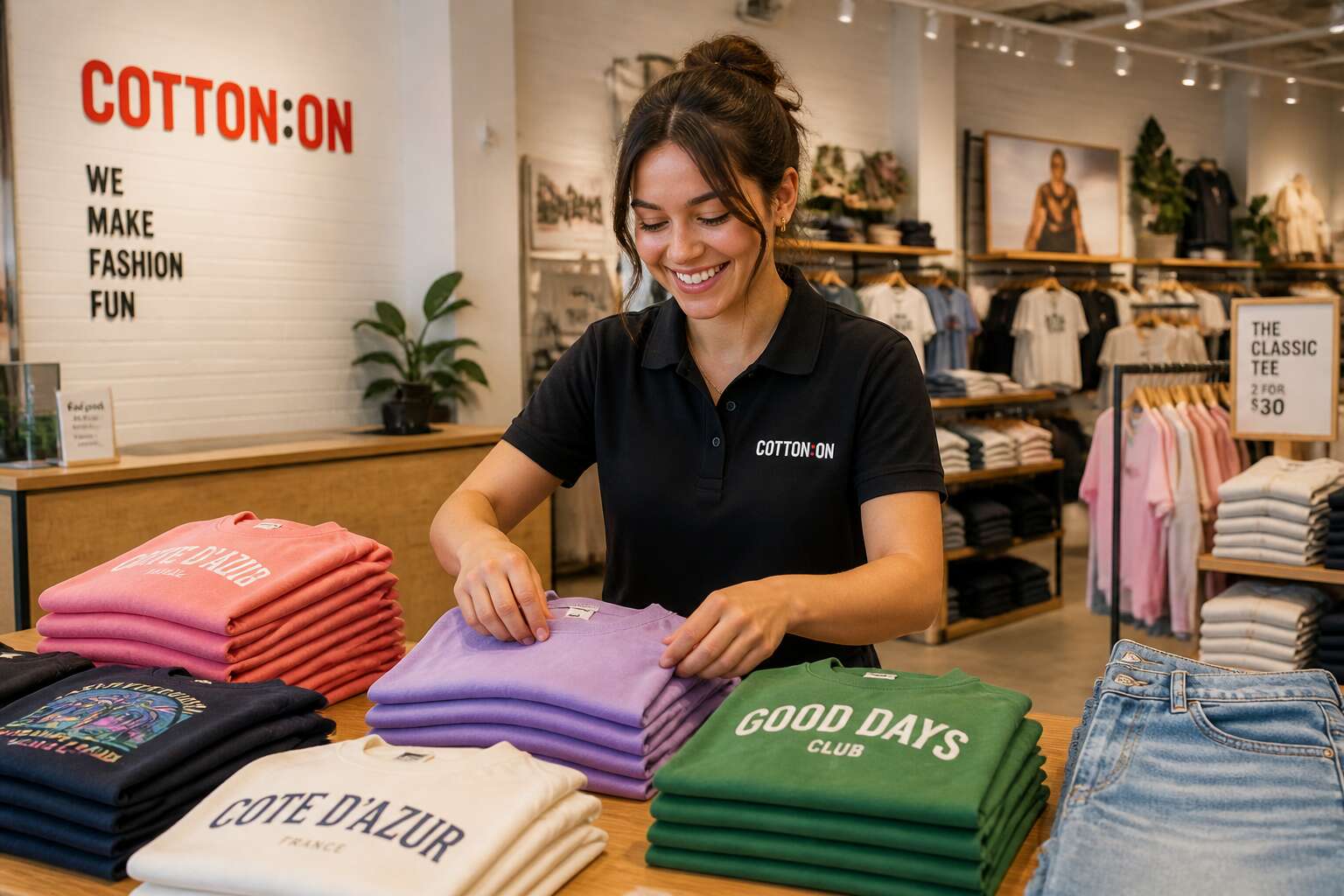
Understanding the Brand and Its Culture
Origins and Global Footprint
Cotton On began in 1991 as one scrappy Australian shop selling clothes cheap enough to replace without tears. That origin story matters for anyone chasing cotton on part time jobs. The brand’s culture is fast turnover, friendly chaos, and a stubborn belief that a t-shirt shouldn’t cost more than a decent braai. This shapes how managers train staff.
The global footprint stretches from Australia to South Africa, with hundreds of stores dotting malls worldwide. It grew by replicating itself, sometimes awkwardly, like a Cape Town branch stocking winter fleeces during a heatwave. For cotton on part time jobs, this scale means you might fold denim beside someone from three countries away. Ambition and measured risk built the brand. I once watched a manager light up when an applicant mentioned the original Geelong store!
Brand Values and Social Responsibility
Some retailers treat values as a poster on the staff room wall. Cotton On treats them as a reason to show up. Every sale funnels money into the Cotton On Foundation’s education projects, so cotton on part time jobs carry tangible social weight. That matters to young workers in South Africa who want their wages to count.
The brand culture is loud, fast, and forgiving of mistakes. Managers train on the floor, not in the back office. I learned by serving a queue of impatient shoppers. The pace suits people who thrive on movement, not those who need a spreadsheet to feel productive. For anyone exploring cotton on part time jobs, the first shift demands quick feet and quick decisions.
Expect these on your first shift:
- Radio hits on repeat, all day
- Fold, refold, and fold again
- A team chat that never sleeps
That energy is the brand. Chaotic, but honest!
What It Is Like to Work in a Fast-Paced Retail Environment
The average retail shift has a rhythm. Cotton On’s has a pulse. Working here means absorbing a constant stream of music, movement, and customer questions. It is fast, physical, and relentlessly social. You are not standing behind a counter; you are in the middle of the floor, solving problems as they appear.
This environment is a specific kind of pressure. You learn to read body language at the fitting rooms, to spot a hesitant shopper from across the store, and to recover a messy denim wall in under a minute. The job is half customer service, half gymnastics. Your brain switches between product knowledge, payment systems, and stock location without a pause. Cotton on part time jobs teach you to trust your instincts because there is no time to second-guess.
The team’s internal communication is a constant side-channel. It is a stream of requests, jokes, and urgent calls for backup. You are never truly alone, even if your till is isolated. Collaboration is not a written policy; it is the only way to survive a Saturday rush. The noise becomes a tool. You learn to filter, prioritize, and act.
This is not a passive role. No slow afternoons scrolled on a phone. The work is kinetic. For the right person, it is exhilarating. The shift flies by because your body and mind are fully engaged. You leave tired, but with a clear sense of what you built that day. You might have started as a cashier, but you finish as a problem-solver.
If you are considering applying, understand what the role demands. The pace is the product. You must be ready to move when the floor calls.
– High-volume tasks that rotate hourly
– Continuous customer interaction
– Dynamic team problem solving
Can you keep pace? Can you find joy in the bustle? Cotton on part time jobs offer a crash course in retail survival. You either learn to love the speed, or you get left behind. The store floor is a demanding teacher, but it rewards those who listen.
Employee Expectations and Dress Code
The first thing you notice in a Cotton On store is the way people talk to each other. The culture is built on a simple premise: work should feel human. In South African stores, this shows up daily. Managers know your name. Colleagues help without being asked. The brand hires for attitude first, and it shows in how teams operate.
The dress code is straightforward. You wear current Cotton On clothing, styled your way. Customers see the product on a real person, which makes the store feel approachable. Denim is a core part of the uniform, and comfortable shoes are non negotiable.
Employee expectations are clear:
– Arrive on time, every time
– Communicate openly with the team
– Own the tasks in front of you
For anyone considering cotton on part time jobs, the culture offers a rare balance. It demands energy, but it returns trust. These roles suit people who want their personality to count. The brand respects individuality while holding everyone to a clear standard.
Team Dynamics and Store Communication
Culture at Cotton On is something you observe in motion. The store runs on shared attention. When one till queues, another colleague calls for backup without being asked. Communication moves through quick cues, not lengthy briefings.
Team dynamics depend on trust. Each person owns their zone, yet knows the whole floor’s status. Daily huddles set priorities, and that clarity matters! New staff pick up the rhythm fast because conversations stay open, honest, and brief.
- Morning huddles align the team
- Real time feedback replaces waiting for reviews
- Mistakes become learning moments, not blame games
For anyone exploring cotton on part time jobs, this culture rewards attentiveness. You gain confidence through daily exchanges. The brand’s structure offers support while leaving room for your own judgement.
Types of Part-Time Positions Available
Store Associate Roles and Daily Responsibilities
Cotton on part time jobs present a range of store associate roles, each with distinct daily responsibilities. Associates rotate through zones, from tills to fitting rooms, adapting to shifting customer flows. The core duties include operating the point of sale, refreshing shelves, and maintaining the visual layout.
- Processing transactions and handling cash
- Responding to customer queries about products
- Unpacking deliveries and tagging new stock
Daily routines also involve monitoring the shop floor and ensuring sizes are stocked. You might fold a display, then run a return. This variety sharpens your adaptability and gives you a real sense of the retail cycle.
Stockroom and Inventory Support Positions
A store’s stockroom rarely gets noticed, but every product on the shelf spends time there first. For anyone exploring cotton on part time jobs, inventory support offers a different pace, one built on accuracy and flow rather than customer interaction. I have done those shifts, and they teach you how a store actually runs.
Stockroom and inventory positions involve receiving deliveries, checking shipment paperwork, and organizing stock by size and style. You also handle:
- Cycle counts to keep system numbers honest
- Transfers between stores to balance stock levels
- Back-of-house recovery during peak seasons
This work suits people who prefer structured tasks. It builds logistics skills that transfer well beyond retail.
Visual Merchandising and Display Opportunities
In South African shopping centres, a window display is often the first conversation a brand has with a shopper. For those weighing cotton on part time jobs, visual merchandising offers a creative alternative to the sales floor pace. This role turns a seasonal concept into tangible scenes, using mannequins, props, and signage.
My morning shifts usually start before the doors open. A typical morning includes:
- Refreshing window displays to match campaign themes
- Re-balancing product rails so sizes move naturally
- Adjusting lighting to highlight key pieces
There is genuine satisfaction in watching a customer stop at a display you built. This department suits people who enjoy arrangement and spatial logic, and the visual skills it builds stay with you long after the shift ends.
Seasonal Hires Versus Permanent Ongoing Roles
Part time work at Cotton On is not a monolith. Some roles flare up for the December rush and vanish by January. Others settle into a rhythm that lasts years. For those exploring cotton on part time jobs, the first fork in the road is often seasonal versus permanent.
Seasonal hires are the sprinters. They join for festive peaks or winter clearances, when foot traffic doubles and every register needs a warm body. Permanent ongoing roles are the marathoners. They offer steadier hours, shift preferences, and a clearer path to supervisor training.
What separates them in practice?
- Seasonal contracts end with the campaign; permanent roles roll over.
- Seasonal staff get basic training; permanent staff get product knowledge sessions.
- Seasonal rosters shift weekly; permanent rosters lock in earlier.
The choice depends on your tolerance for uncertainty. Seasonal work pays well and ends cleanly. Permanent work demands more commitment but rewards with stability.
Typical Shift Patterns and Scheduling Flexibility
Beyond the familiar store associate and stockroom roles, cotton on part time jobs often include fitting room coordinators and front-of-house greeters. These positions require a sharp eye for tidiness and a talent for reading customer moods, all while juggling the store’s rhythm. Shifts vary widely, from short four hour bursts to longer weekend stretches, depending on foot traffic and seasonal campaigns.
Typical shift patterns at Cotton On follow a predictable but adjustable structure. Morning shifts catch the post-school rush, while evening shifts handle the after-work crowd. For students or parents, the scheduling flexibility is a practical perk. Many stores allow swap systems or preference forms.
- Weekday early shifts from 9am to 1pm
- Late afternoon shifts from 2pm to 6pm
- Alternating Saturday rotations
That said, cotton on part time jobs demand punctuality and a willingness to adapt when rosters change at short notice. Managers appreciate staff who can float between registers and the shop floor without complaint. The result is a workable balance between personal commitments and retail demands.
How to Successfully Apply
Where to Search for Openings
Retail positions in South Africa attract hundreds of applicants within days of posting. That means a sloppy application gets overlooked. For cotton on part time jobs, a clear application states your available hours upfront. It mentions any previous retail exposure, even casual work. A one page CV helps. Using the same language as the job listing also helps.
Where you search matters as much as how you apply. The most productive channels include:
- The company’s official careers portal, which lists all open roles first.
- Job aggregators like Indeed and PNet, where you can filter by city.
- In store notice boards, especially for smaller branches.
I found my own role through a direct application, not a portal. That route worked because I asked for the store manager by name. For cotton on part time jobs, a targeted approach often yields better results than a scattered one.
Building a Retail-Focused Resume
The resume is your first whisper in the dark. It must carry weight without shouting. For cotton on part time jobs, a retail-focused resume shows how you handle the living chaos of a shop floor. It reveals your hours, your history, your willingness to stand when others sit.
Open with your availability. Store managers tire of guessing. Mention previous retail exposure, even casual work, in the second breath. A one page CV is the standard. Anything longer invites the bin.
Mirror the language of the listing. If they write “energetic and reliable,” you write those exact words. A short list of relevant skills works well here:
- Cash handling and till experience
- Ability to work weekends and public holidays
- Comfort with fast moving stock
The best resumes feel like introductions. For cotton on part time jobs, that introduction marks the difference between a call back and a silence that never breaks.
Online Application Best Practices
Nearly half of all online applicants abandon their forms before the final click. For cotton on part time jobs, where hiring decisions move quickly, that incomplete submission quietly removes you from consideration. The portal asks for straightforward details, yet small mistakes cause unnecessary delays. Fill every field, even the optional ones, because blank sections often trigger automatic screening. Upload your documents as PDFs, since Word files can shift formatting on the hiring manager’s screen. Apply on a desktop rather than a phone, as mobile interfaces sometimes drop entire blocks of text.
Here is what works when submitting online:
– Save a draft before exiting, just in case the session times out.
– Double check your availability against the shift requirements.
– Use the same email address across the application and your follow up.
The entire process takes ten minutes. A single forgotten detail can cost you the interview.
Referral Programs and Networking Tips
Your cousin’s best friend’s ex-roommate works at Cotton On. That relationship, however tenuous, beats a cold application every time. In South Africa, retail hiring often leans on word of mouth, so a warm introduction gives you a foot in the door before your CV gets a second glance.
Start by asking current employees about their store’s culture and open shifts. Then, follow these steps:
- Request an introduction during quieter hours, not the weekend rush.
- Mention your availability for cotton on part time jobs clearly, so they can vouch for your fit.
- Offer a small favour, like covering a shift, to prove your flexibility.
Networking does not mean relentless messaging. A casual chat at the mall’s food court works wonders. Just avoid the awkward LinkedIn stalk. Keep it genuine and brief, and the referral becomes your silent champion. I have seen shy applicants get hired purely because they asked the right person at the right time.
Acing the Interview Process
Commonly Asked Retail Interview Questions
Interviews for cotton on part time jobs feel like a conversation with a friend who happens to hold a clipboard. The panel wants to see if you can stay calm when the fitting rooms explode and the queue snakes past the denim wall. Expect questions about your real-life reactions, not rehearsed speeches.
Common retail interview questions probe your instincts rather than your memory. They might ask you to describe a moment you turned a grumpy shopper into a returning one, or how you would prioritise tasks when three customers demand help at once. One sterling answer usually mentions a specific example from your past, even a small one from school or a volunteer duty.
– What does excellent customer service look like to you?
– How do you manage stress during a seasonal rush?
– Why do you want to work at this store specifically?
Keep your replies short, honest, and tied to the rhythm of the shop floor. The store craves reliability, so speak about your punctuality and your willingness to learn. That is what separates a call-back from a silent email.
Showcasing Customer Service Excellence
Acing an interview for cotton on part time jobs means showing the panel you can think on your feet. The store runs on quick decisions and friendly follow through. Your answers should reflect that rhythm, not a memorised script.
When asked about a tricky customer moment, do not recite a textbook definition. Walk them through the sequence: listen, acknowledge, fix it, and check back. One applicant landed the role by describing how she helped a shopper find a missing size by checking the stockroom before the manager even finished the question. That specificity sticks.
- Arrive early and read the store’s energy.
- Share a real mistake you fixed, not a perfect story.
- Ask about the busiest time of day and how the team handles it.
Customer service excellence in cotton on part time jobs comes across in how you treat the interview itself. Greet everyone, not just the interviewer. Answer with concrete examples. Leave them certain you will show up on Saturday morning ready to work.
What to Wear and How to Prepare
Retail interviews in South Africa can feel like a lottery. Walk into a Cotton On store and you will notice it within seconds. The floor staff move with purpose. The music sets a pace. Your first task is to match that atmosphere without forcing it.
Cotton On part time jobs require a practical mindset. The panel does not want a monologue about your passion for fashion. They want evidence that you can handle a till rush, a sizing query, and a messy recovery rack all before your first coffee break. Wear something that fits the brand’s aesthetic, but add one layer of polish. A clean, dark pair of jeans with a solid tee and closed shoes works. Add a blazer if you want to show intent. Avoid heels you cannot walk in. The store floor is your future workspace.
Preparation goes beyond reading the website. Check the store’s social media pages. Note the products they push most. Look at the local competitors. When you answer, refer to those observations. It signals that you understand the retail landscape, not just the job description.
Carry a small notebook and a pen. It sounds old fashioned. It works. When the interviewer describes the store’s daily rhythm, jot down a detail. Ask about the team’s approach to busy Saturday mornings. Be direct and curious. The interview is a two way conversation.
- Review the Cotton On careers portal for current vacancy details.
- Prepare two questions about store operations.
- Plan your route so you arrive ten minutes early.
- Choose an outfit that lets you bend, reach, and move freely.
Most candidates focus on answering well. They forget that the interview starts at the entrance. Greet the staff member at the door. Smile at the cashier. The panel will hear about it. Your behaviour before the formal conversation matters as much as your responses inside the room.
Sit with your shoulders back. Keep your hands visible. When you speak about a past retail experience, use the language of the floor. Say “I recovered the department” instead of “I kept things tidy.” That nuance helps the panel picture you in the role. The interview ends when you leave the store. Thank the panel by name. Follow up with a short email the same day. For Cotton On part time jobs, this small gesture often separates the memorable applicant from the forgettable one.
Perks, Pay, and Career Advancement
Employee Discounts and Exclusive Rewards
Many applicants overlook how cotton on part time jobs reward tenure with tangible extras. Beyond the hourly wage, staff receive a 30% merchandise discount on every new collection, which adds up quickly over a season.
Pay scales stay competitive, and night or weekend shifts often carry premium rates. Exclusive rewards land through a mobile app, where points convert to digital vouchers for groceries or fuel.
- Quarterly team bonuses
- Free uniform pieces
- Priority access to clearance events
Career advancement moves fast for reliable workers. Cotton on part time jobs frequently lead to permanent floor coordinator roles, since managers prefer promoting from within once they see consistent performance.
Training Programs and Skill Development
Most retail training is a one day induction and nothing else. Cotton on part time jobs use a modular system that actually builds skills. Each new hire completes a digital onboarding course, followed by floor based assessments. Managers conduct fortnightly skill checks, and each completed module adds a small pay step.
- Product knowledge and sizing
- Point of sale troubleshooting
- Loss prevention basics
- Customer feedback handling
The training continues beyond the basics. Seasonal modules teach event planning and display refreshes, while advanced sessions cover scheduling and team briefing. These skills transfer directly to other retail roles, so even if you move on from cotton on part time jobs, you leave with a portfolio. The process is rigorous, but it explains why Cotton On staff tend to handle difficult customers with measurable calm.
Transitioning From Part-Time to Full-Time
Pay at Cotton On starts at a fair baseline, but the real value appears in the increments. Each skill module you complete adds a small amount to your hourly rate. In South Africa, this means your wage can climb noticeably within your first six months.
Perks extend beyond the discount. You get access to wellbeing support and flexible rostering that respects your studies or other commitments. The pathway from casual to full time is visible.
- Regular performance check ins every two weeks
- Full time roles advertised internally first
- Management trainees selected from existing staff
Cotton on part time jobs often become permanent. Store leaders track your reliability and product knowledge, and they promote from within when a permanent roster spot opens.
Long-Term Career Pathways in Retail
Nearly two decades ago, a casual retail job was a stopgap. Today, cotton on part time jobs function as a strategic entry point into a global fashion group. The pay structure rewards pace. South African store associates see incremental rate adjustments tied to completed skill modules, so your hourly take home rises with proven competence, not spent time.
The perks layer includes a measurable discount on product, but the deeper value sits in scheduling autonomy. Rosters are built around your academic calendar or childcare pickup times. Managers actively discourage open availability requests from students. They prefer a predictable, reliable block of hours over a scattered seven day scramble.
Career advancement follows a visible grid. Each store maintains a succession chart that maps the journey from floor associate to regional trainer. Store leaders nominate candidates for the management trainee programme after roughly six months of consistent performance.
– Complete the visual merchandising module to qualify for display lead shifts
– Shadow the stockroom controller to learn inventory forecasting
– Assist with the weekly roster draft to understand labour cost allocation
– Run the morning briefing to practice team direction
These actions generate a promotion file that doubes as evidence during biannual performance reviews. The company prefers to move people internally rather than hire strangers, a policy that turns a short term gig into a foundational career layer for many South African retail professionals.
Balancing Work With Study or Personal Commitments
In South Africa, cotton on part time jobs allow students to earn without sacrificing academic performance. The pay structure rewards completed skill modules, so a reduced weekly schedule still produces a higher hourly rate over time. You are not penalised for limiting your availability to evenings or weekends.
Perks work around your life, not the other way around. You can request shifts that fit around tests, clinical rotations, or childcare pickup times. Managers prefer a fixed block of hours over scattered availability, which gives you a dependable routine for study sessions and personal commitments.
- Complete a module during quieter shifts
- Shadow a senior team member for promotion evidence
- Use paid breaks to review lecture notes
Career advancement remains accessible even with limited hours. The succession chart tracks your progress, and biannual reviews weigh your completed actions against your availability. Cotton on part time jobs can feed directly into a management trainee pathway while you finish your qualification.



0 Comments